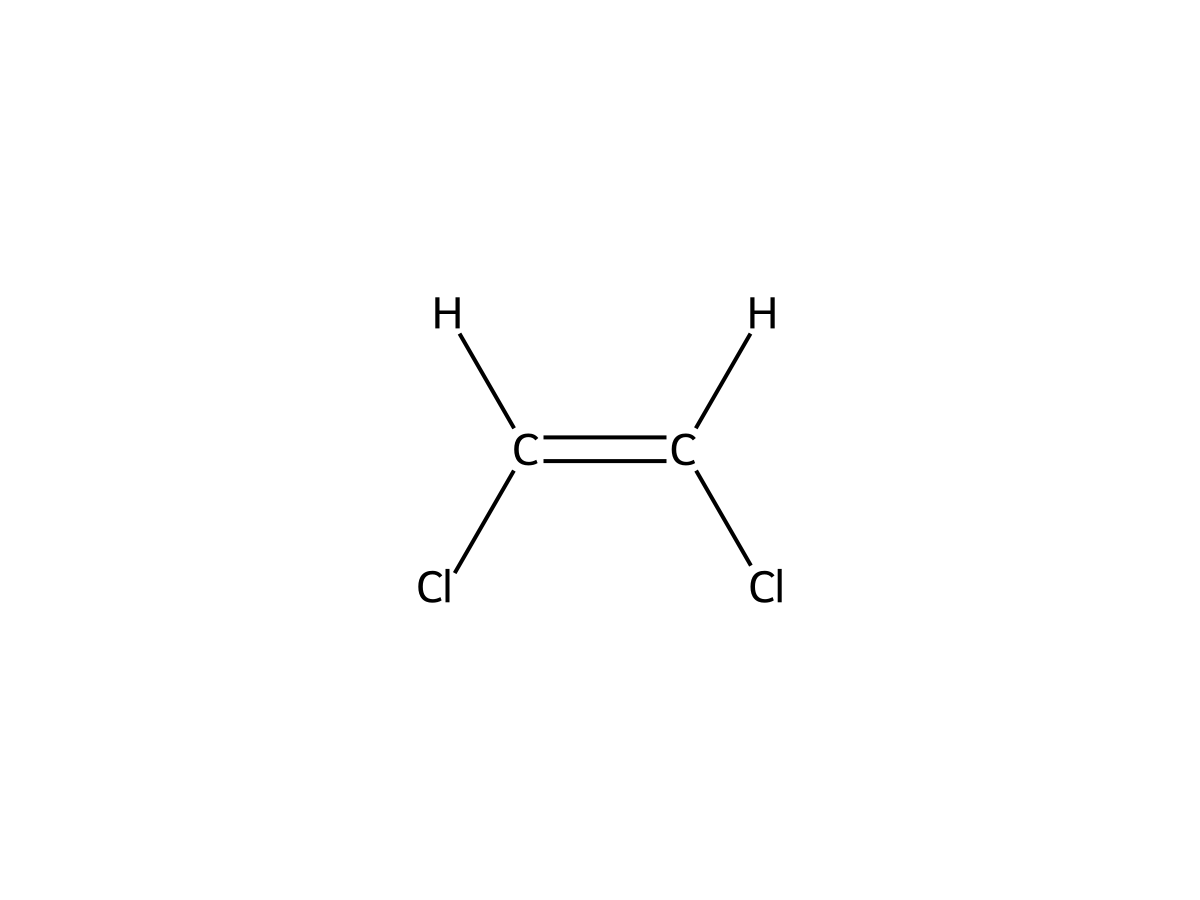
cis-1,2-Dichloroethylene (cis-DCE)
What is cis-1,2-Dichloroethylene?
cis-1,2-Dichloroethylene (cis-DCE) is a chlorinated hydrocarbon commonly encountered at groundwater remediation sites. Although cis-DCE has been used in certain industrial and chemical manufacturing applications, it is most frequently detected as a daughter product formed during the biological degradation of perchloroethylene (PCE) and trichloroethylene (TCE).
cis-DCE is a colorless liquid with a mild odor and is one of the most commonly detected contaminants at chlorinated solvent sites. The presence of cis-DCE often indicates that reductive dechlorination is occurring in the subsurface; however, elevated cis-DCE concentrations may also indicate that biodegradation has stalled before complete detoxification.
Due to its widespread occurrence as a degradation intermediate, cis-DCE is frequently evaluated during groundwater investigations, remediation performance monitoring, and site closure assessments.
Chemical Properties
| Property | Value |
|---|---|
| Chemical Name | cis-1,2-Dichloroethylene |
| Common Name | cis-DCE |
| Chemical Formula | C₂H₂Cl₂ |
| CAS Number | 156-59-2 |
| Molecular Weight | 96.94 g/mol |
| Density | 1.28 g/cm³ |
| Solubility in Water | Approximately 3,500 mg/L at 25°C |
Unlike PCE and TCE, cis-DCE is not typically encountered as a Dense Non-Aqueous Phase Liquid (DNAPL). It is generally present as dissolved contamination in groundwater or as a degradation product of other chlorinated solvents.
Common Sources of cis-DCE
cis-DCE may be present due to:
- Biological degradation of PCE
- Biological degradation of TCE
- Historical chemical manufacturing operations
- Industrial solvent releases
- Legacy groundwater contamination
At most remediation sites, cis-DCE is encountered as a daughter product generated during reductive dechlorination.
Environmental Concerns
cis-DCE is commonly formed through the following degradation pathway:
- Perchloroethylene (PCE)
- Trichloroethylene (TCE)
- cis-1,2-Dichloroethylene (cis-DCE)
- Vinyl Chloride (VC)
- Ethene (the desired non-toxic end product)
The presence of cis-DCE often indicates that biological degradation is progressing. However, accumulation of cis-DCE may indicate incomplete dechlorination caused by insufficient electron donor, unfavorable geochemical conditions, or the absence of microorganisms capable of completing the degradation pathway.
Because cis-DCE is more soluble than PCE and TCE, it can migrate significant distances in groundwater and may contribute to plume expansion.
Behavior in Soil and Groundwater
cis-DCE contamination is typically encountered as:
- Dissolved contamination in groundwater
- Sorbed contamination attached to soil particles
- Vapor-phase contamination within the vadose zone
- A degradation product of PCE and TCE
Because cis-DCE is relatively mobile in groundwater, it can persist in downgradient portions of contaminant plumes even after concentrations of the parent compounds have declined.
The detection of cis-DCE alone does not necessarily indicate successful remediation. Evaluation of geochemical conditions, daughter products, microbial populations, and contaminant trends is often necessary to determine whether degradation is progressing toward complete detoxification.
Human Health Effects
Exposure to elevated concentrations of cis-DCE may affect the:
- Central nervous system
- Liver
- Respiratory system
Although cis-DCE is generally considered less toxic than vinyl chloride, it remains a regulated groundwater contaminant and may require remediation where concentrations exceed applicable regulatory standards.
Regulatory Standards
Regulatory criteria vary by jurisdiction; however, the United States Environmental Protection Agency has established a Maximum Contaminant Level (MCL) for total dichloroethylene in drinking water of 70 µg/L.
Many states have additional groundwater, soil gas, vapor intrusion, and risk-based screening criteria.
Remediation Technologies for cis-DCE
Several remediation technologies may be applied depending on site conditions, contaminant concentrations, geology, and cleanup objectives.
Common treatment approaches include:
- Enhanced Reductive Dechlorination (ERD): ERD stimulates microorganisms that convert cis-DCE to vinyl chloride and ultimately harmless ethene.
- Enhanced Anaerobic Bioremediation: Bioaugmentation cultures containing specialized microorganisms may be added to accelerate complete dechlorination where native microbial populations are insufficient.
- In Situ Chemical Reduction (ISCR): ISCR technologies utilize reactive materials such as zero-valent iron to chemically reduce chlorinated contaminants and accelerate destruction.
- Source Area Treatment: Because cis-DCE is frequently generated from upstream contaminants, treatment often focuses on addressing source areas containing PCE and TCE while promoting complete dechlorination throughout the plume.
Tersus Solutions for cis-DCE Remediation
Tersus Environmental provides a range of technologies to support the remediation of cis-DCE and other chlorinated solvents in soil and groundwater.
Commonly utilized products include:
Electron Donors
- EDS-ER™ – emulsified vegetable oil substrate for Enhanced Reductive Dechlorination.
- EDS-ME™ – alcohol co-substrate for enhanced biological activity.
- EDS-QR™ – a high-purity, quick-release soluble electron donor that rapidly establishes anaerobic conditions for fast-track bioremediation projects.
Activators & Alkaline Reagents
- EDS-Activator™ – a proprietary remediation catalyst that accelerates fatty acid release, enhances hydrogen generation, and supports efficient reductive dechlorination as part of the EDS-Advanced™ platform.
Bioaugmentation Cultures
- Specialized microbial cultures may be added to accelerate reductive dechlorination where native dechlorinating populations are limited.
Abiotic Amendments
- BioBoost™ GeoChem – geochemical amendment designed to support reducing conditions and enhance biological treatment.
- mZVI™ – micron-scale sulfidated zero-valent iron for In Situ Chemical Reduction applications.
- ZVI-IronGel™ – injectable colloidal iron technology for treatment of chlorinated solvents.
Surfactants & Solvents
- EDS-Substrate Shuttle™ – a targeted substrate delivery amendment designed to improve distribution of remediation amendments in low-permeability formations and areas impacted by residual DNAPL.
- TASK™ Anionic Surfactant Blend – a site-tailored surfactant system used in surfactant-enhanced aquifer remediation (SEAR) applications to improve recovery of DNAPL source areas containing chlorinated solvents.
Tersus also provides site characterization, contaminant flux measurement, compound-specific isotope analysis (CSIA), microbial diagnostic testing, and remedial design support to help optimize treatment performance.
Frequently Asked Questions
What causes cis-DCE to form?
cis-DCE is most commonly formed during the biological degradation of PCE and TCE through reductive dechlorination.
Is cis-DCE a DNAPL?
Although pure cis-DCE has a density greater than water and technically qualifies as a DNAPL, it is rarely encountered as a separate DNAPL source. Instead, cis-DCE is most commonly found as dissolved groundwater contamination resulting from the biodegradation of PCE and TCE.
Why are cis-DCE concentrations increasing?
Increasing cis-DCE concentrations often indicate that PCE and TCE are degrading. However, accumulation may also indicate that biodegradation has stalled before reaching vinyl chloride and ethene.
How is cis-DCE removed from groundwater?
Common remediation approaches include enhanced reductive dechlorination, bioaugmentation, in situ chemical reduction, source treatment, and optimization of subsurface geochemical conditions.
Related Contaminants
- Perchloroethylene (PCE)
- Trichloroethylene (TCE)
- Vinyl Chloride (VC)
- Carbon Tetrachloride
- Chloroform
- 1,1,1-Trichloroethane (TCA)
- 1,1-Dichloroethylene (1,1-DCE)