
Benzene
What is Benzene?
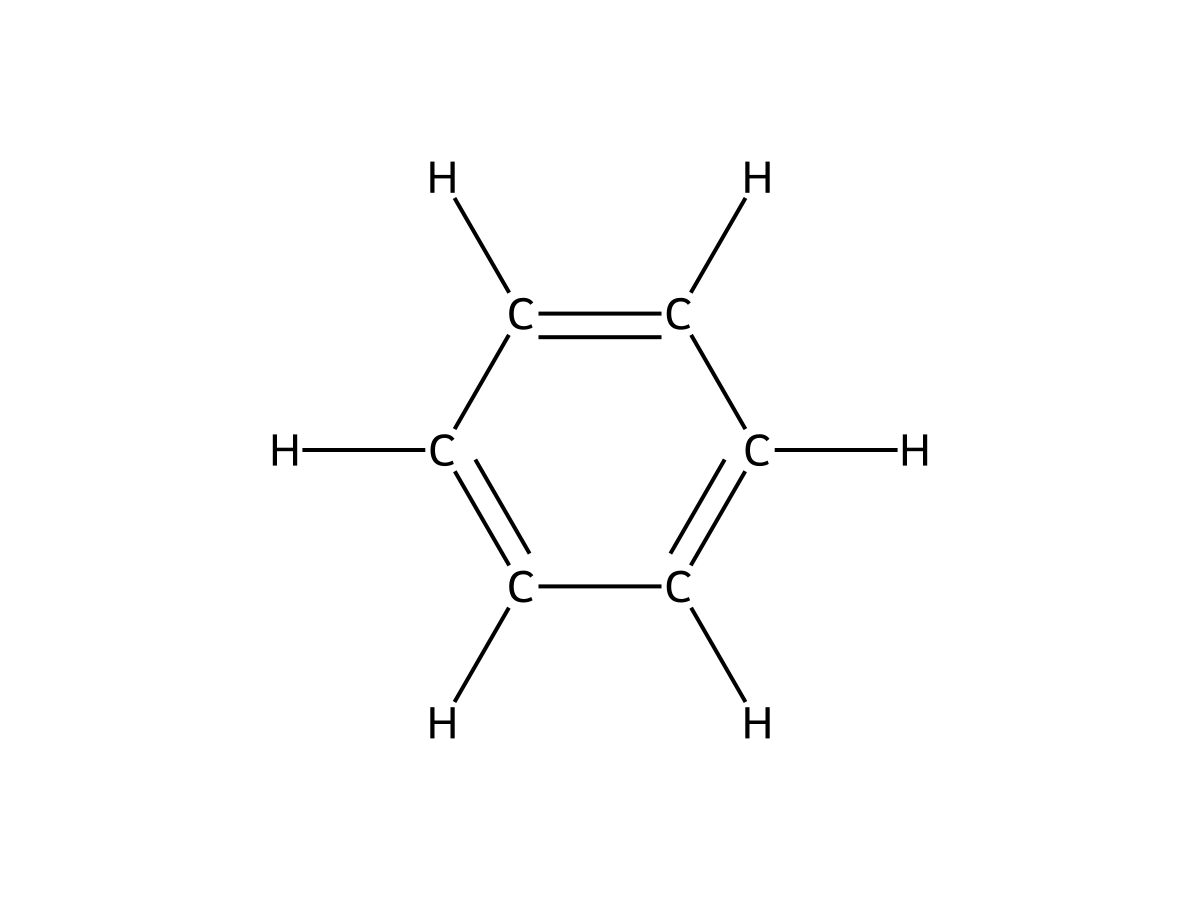
Benzene is a naturally occurring and industrially produced aromatic hydrocarbon widely used in the manufacture of plastics, resins, synthetic fibers, detergents, dyes, pharmaceuticals, and other chemical products. Benzene is also a major component of gasoline, crude oil, and many petroleum fuels.
Because of its widespread use and occurrence in petroleum products, benzene is one of the most frequently detected groundwater contaminants at petroleum release sites, refineries, fuel terminals, pipelines, bulk storage facilities, and former manufactured gas plant (MGP) sites.
Due to its mobility in groundwater and well-established health risks, benzene is often the primary risk driver at petroleum-contaminated sites and is closely scrutinized by regulators during site investigation and remediation.
How Tersus Can Help with Benzene
Tersus Environmental provides several technologies that can be used to address benzene in soil and groundwater. Treatment selection depends on site geochemistry, contaminant distribution, source conditions, and remediation objectives.
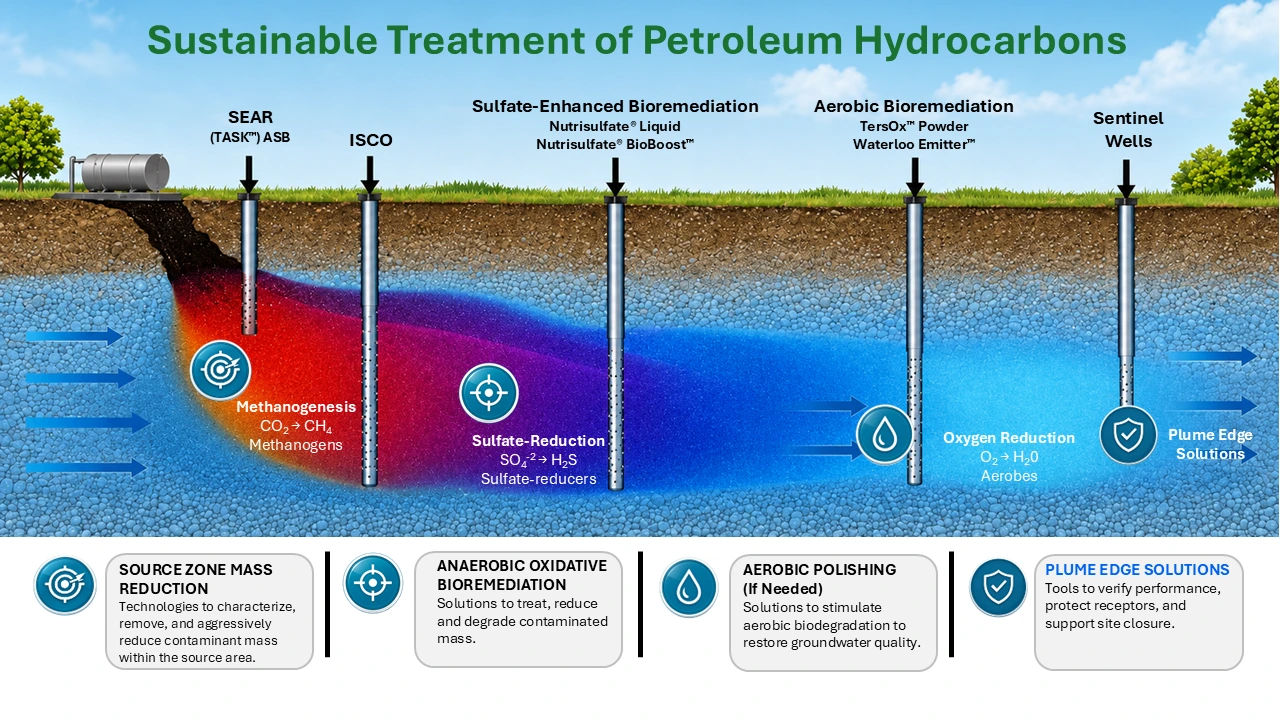
Commonly utilized products include:


Chemical Properties
Benzene is lighter than water and is classified as a Light Non-Aqueous Phase Liquid (LNAPL). When released as part of gasoline or other petroleum products, benzene may dissolve into groundwater and migrate beyond the free-product source area.
| Property | Value |
|---|---|
| Chemical Name | Benzene |
| Common Name | Benzene |
| Chemical Formula | C₆H₆ |
| CAS Number | 71-43-2 |
| Molecular Weight | 78.11 g/mol |
| Density | 0.88 g/cm³ |
| Solubility in Water | Approximately 1,800 mg/L at 25°C |
Common Sources of Benzene
Benzene may be present due to:
- Petroleum releases from underground storage tanks (USTs)
- Gasoline spills and leaks
- Petroleum pipelines
- Fuel terminals and bulk storage facilities
- Refineries and petrochemical facilities
- Former manufactured gas plant (MGP) sites
- Industrial solvent usage
Benzene is commonly found alongside other petroleum hydrocarbons, including toluene, ethylbenzene, and xylenes (BTEX compounds).
Environmental Concerns
Benzene is one of the most important petroleum contaminants because of its mobility, persistence, and toxicity.
Unlike many chlorinated solvents, benzene does not undergo reductive dechlorination. Instead, biodegradation typically occurs through aerobic biodegradation or, under certain conditions, anaerobic biodegradation involving nitrate, sulfate, or methanogenic processes.
Although benzene can naturally degrade under favorable conditions, concentrations may persist for many years where oxygen and other electron acceptors are limited.
Because benzene is relatively soluble compared to many petroleum hydrocarbons, it often becomes the leading edge contaminant within groundwater plumes.
Behavior in Soil and Groundwater
Benzene contamination may exist as:
- Free-phase petroleum product (LNAPL)
- Dissolved contamination in groundwater
- Sorbed contamination attached to soil particles
- Vapor-phase contamination within the vadose zone
Benzene readily partitions from groundwater into soil gas and can contribute to vapor intrusion concerns where contamination is located beneath or near occupied buildings.
Because of its mobility and relatively slow natural attenuation under some site conditions, benzene is often a key contaminant used to evaluate plume stability and remediation progress.
Human Health Effects
Exposure to elevated concentrations of benzene may affect the:
- Bone marrow
- Blood-forming tissues
- Immune system
- Central nervous system
Long-term exposure has been associated with blood disorders and increased cancer risk. Benzene is classified as a known human carcinogen and is one of the most heavily regulated petroleum contaminants.
Because of its toxicity, benzene frequently drives remedial objectives and site closure decisions.
Regulatory Standards
Regulatory criteria vary by jurisdiction; however, the United States Environmental Protection Agency has established a Maximum Contaminant Level (MCL) for benzene in drinking water of 5 µg/L.
Many states have additional groundwater, soil, soil gas, vapor intrusion, and risk-based screening criteria.
Frequently Asked Questions
What is benzene commonly used for?
Benzene is used in the production of plastics, synthetic fibers, resins, detergents, dyes, pharmaceuticals, and numerous industrial chemicals. It is also a component of gasoline and crude oil.
Is benzene an LNAPL?
Pure benzene has a density less than water and is classified as a Light Non-Aqueous Phase Liquid (LNAPL). However, benzene is typically encountered as a dissolved constituent of petroleum products rather than as a separate free-phase chemical.
Can benzene biodegrade naturally?
Yes. Benzene can biodegrade under both aerobic and anaerobic conditions, although degradation rates depend on site-specific geochemical conditions and microbial populations.
How is benzene removed from groundwater?
Common remediation approaches include enhanced aerobic bioremediation, enhanced anaerobic bioremediation, chemical oxidation, air sparging, soil vapor extraction, and source area treatment.
Related Contaminants
- Toluene
- Ethylbenzene
- Xylenes
- Naphthalene
- Methyl Tertiary Butyl Ether (MTBE)
- Ethylene Dibromide (EDB)
- 1,2-Dichloroethane (1,2-DCA)
