
Case Study Highlights
A chlorinated solvent-impacted groundwater site in Bluffton, South Carolina, was treated using a combination of in situ chemical reduction (ISCR) and enhanced anaerobic bioremediation. The treatment approach incorporated micron-sized zero-valent iron (mZVI), emulsified vegetable oil, and supplemental electron donors to promote chemical reduction and biological degradation of chlorinated solvents.
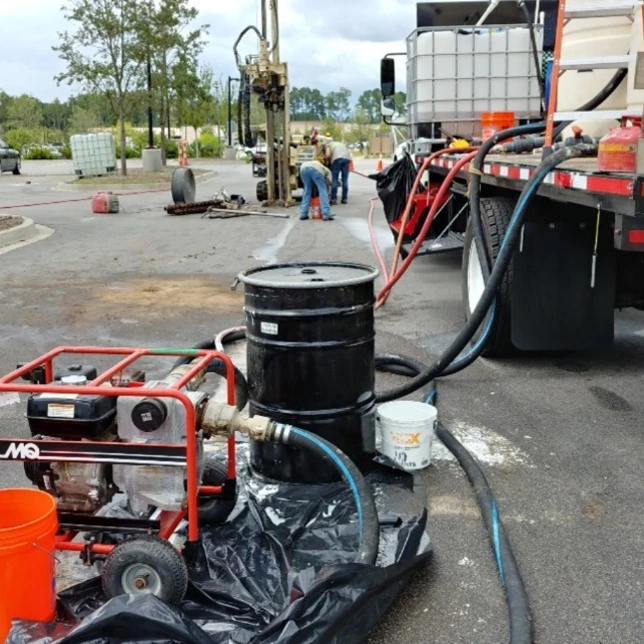
Tersus Environmental supplied the remediation amendments and provided onsite technical support during system setup, amendment preparation, and injection startup. The project required field mixing of multiple amendments and controlled injection through temporary and permanent wells.
Remediation Approach and Technologies
- In Situ Chemical Reduction (ISCR): mZVI™ Suspension used to promote chemical reduction of chlorinated solvents in groundwater.
- Enhanced Anaerobic Bioremediation: EDS-ER™ emulsified vegetable oil and EDS-QR™ refined glycerin used as electron donors to support reductive dechlorination.
- Amendment Preparation: Field mixing of mZVI, electron donors, dispersants, and buffering agents to prepare the injection solutions.
- Groundwater pH Management: Buffering agents incorporated into the injection mixtures to support treatment conditions.
- Subsurface Amendment Delivery: Prepared amendments injected through temporary and permanent wells, with injection pressures and flow rates monitored during application.
- Field Technical Support: Tersus personnel assisted with initial equipment setup, amendment mixing procedures, and injection startup.
The injection program used a batch-mixing approach to prepare and distribute the amendments across the treatment points. Injection pressures were maintained below 10 psi during the documented field activities.
The project documents the field preparation, mixing, and injection of mZVI and enhanced bioremediation amendments, including the procedures used to control injection conditions and distribute amendments through the treatment zone.
Project Benefits
The combined use of micron-sized zero-valent iron (mZVI) and enhanced anaerobic bioremediation provided an integrated treatment approach for chlorinated solvent-impacted groundwater. Tersus Environmental supplied the remediation amendments and supported field preparation and injection startup.
Benefits of the Combined Treatment Approach
- Complementary Treatment Mechanisms: mZVI provided a chemical reduction mechanism, while EDS-ER™ and EDS-QR™ supplied electron donors intended to support anaerobic biodegradation of chlorinated solvents.
- Field-Prepared Amendment Mixtures: Batch mixing allowed the project team to prepare mZVI suspensions, electron donor solutions, and buffering amendments under controlled field conditions.
- Subsurface Amendment Delivery: Temporary and permanent injection wells provided access to the treatment zone for direct delivery of remediation amendments.
- Controlled Injection Procedures: Injection pressures and flow rates were monitored during application, with injection pressures maintained below 10 psi during the documented field activities.
- Technical Support During Implementation: Tersus provided onsite engineering and technical assistance during initial system setup, amendment preparation, and injection startup.
- Coordinated Amendment Application: The injection program incorporated chemical reductants, electron donors, and buffering agents as part of a combined ISCR and enhanced bioremediation strategy.
Project FAQs
The treatment approach combined in situ chemical reduction (ISCR) with enhanced anaerobic bioremediation to address chlorinated solvent-impacted groundwater.
Micron-sized zero-valent iron provided a chemical reduction mechanism, while organic electron donors were introduced to stimulate microbial activity associated with reductive dechlorination. The combined approach was intended to support both chemical and biological contaminant degradation.
The injection program incorporated mZVI™ Suspension, EDS-ER™ emulsified vegetable oil, EDS-QR™ refined glycerin, dispersants, and buffering agents.
The original injection plan also identified KB-1® Plus bioaugmentation culture. The amendments were selected to provide chemical reduction, electron donor availability, and groundwater conditions intended to support anaerobic biodegradation.
The project used field batch-mixing procedures to prepare separate amendment solutions.
The mZVI suspension was prepared using water, thickening agents, and zero-valent iron particles. Electron donor mixtures containing EDS-ER™ and EDS-QR™ were prepared with water and buffering agents.
Mixing procedures were developed to obtain suitable amendment consistency and support controlled delivery through the injection system.
The prepared amendments were delivered through temporary and permanent injection wells installed by the project team.
Field personnel monitored injection pressures and flow rates during application. The documented injection procedures maintained pressures below 10 psi.
Tersus personnel provided technical support during the initial system setup, amendment mixing, and injection startup.
The case study documents field preparation and injection of mZVI and enhanced bioremediation amendments at a chlorinated solvent-impacted groundwater site in South Carolina.
The project established a field mixing and injection procedure for delivering the combined amendments through temporary and permanent wells. Tersus provided onsite technical assistance during initial implementation.
Post-treatment groundwater monitoring data were not included in the original case study, so contaminant reduction and achievement of cleanup objectives cannot be evaluated from the available documentation.
Project Snapshot
Location: Bluffton, South Carolina
Site Type: Chlorinated solvent-impacted groundwater
Contaminants: Chlorinated solvents
Remediation Technologies: In Situ Chemical Reduction (ISCR) and Enhanced Anaerobic Bioremediation
Key Amendments: mZVI™ Suspension, EDS-ER™, EDS-QR™, and buffering agents
Bioaugmentation: KB-1® Plus
Injection Method: Field-mixed amendments delivered through temporary and permanent injection wells
Injection Volume: Approximately 22,000 gallons (reported treatment program volume)
Technical Support: Amendment supply, field mixing guidance, and onsite injection startup support
